There’s a particular kind of helplessness that comes over us when someone we love is hurting. Maybe she just came home from surgery. Maybe she’s grieving a loss. Maybe life simply piled up on her and she needs to know someone noticed. In these moments, we reach for our phones to text “let me know if you need anything” — and then we sit there, wishing there was something more tangible we could do.
There is. And it fits in a single, beautifully wrapped box.
More Than a Gift — A Hug You Can Hold
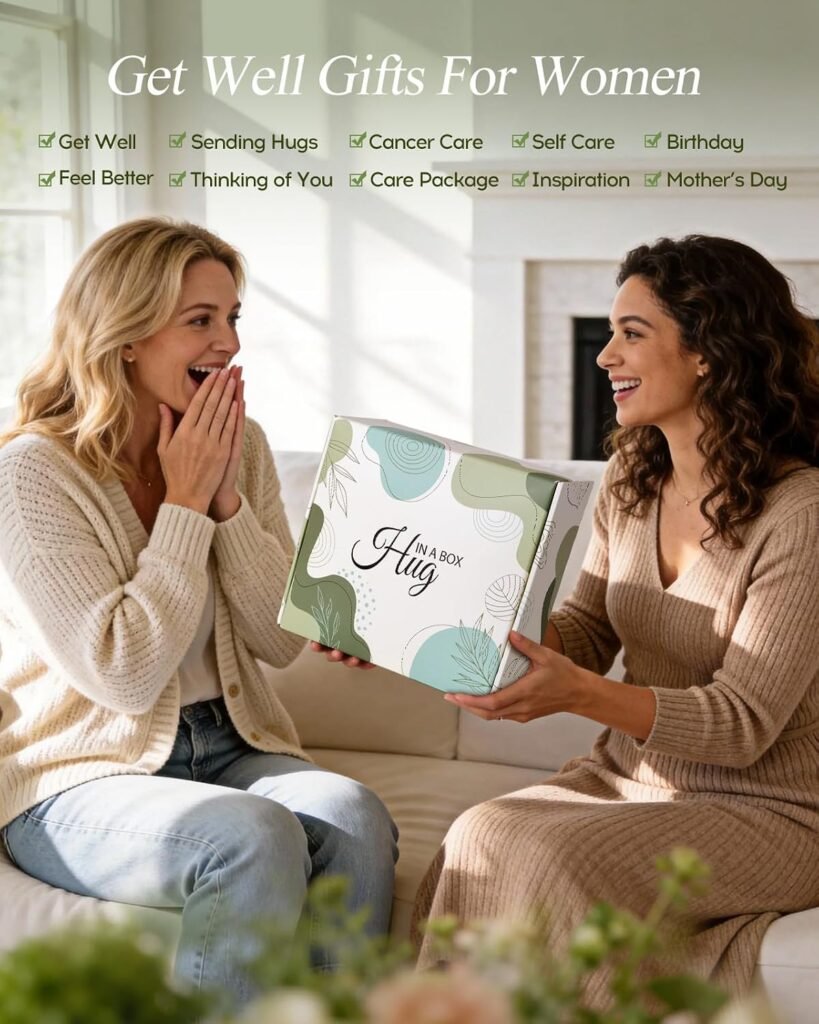
Some gifts are transactional. This isn’t one of them. A well-designed get-well and sympathy gift basket is built around a simple emotional truth: comfort is physical before it’s anything else. Before someone can process kind words, they often just need to feel warm, soft, and cared for. That’s the whole philosophy behind a “hug in a box” — it isn’t a metaphor, it’s a design principle.
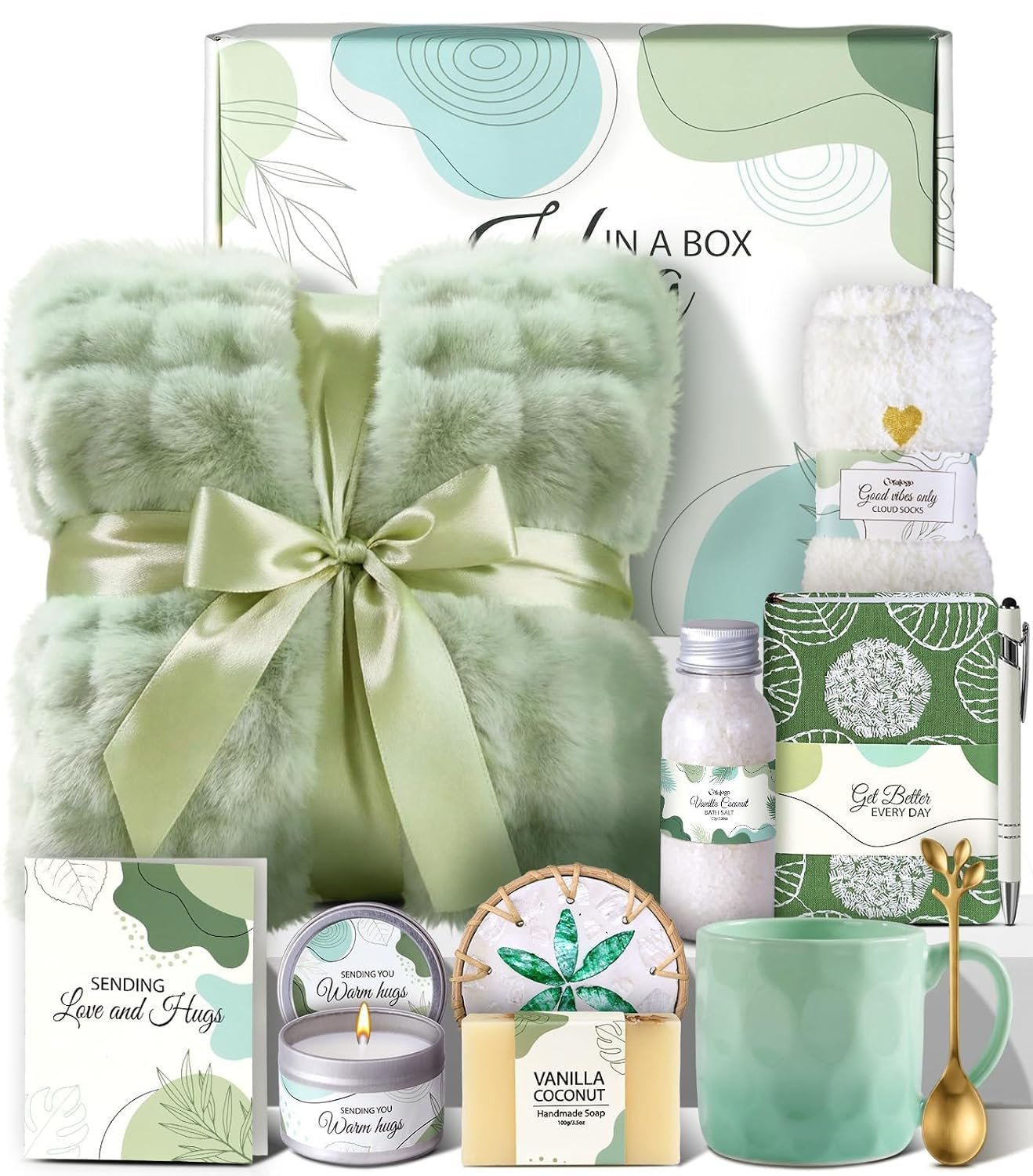
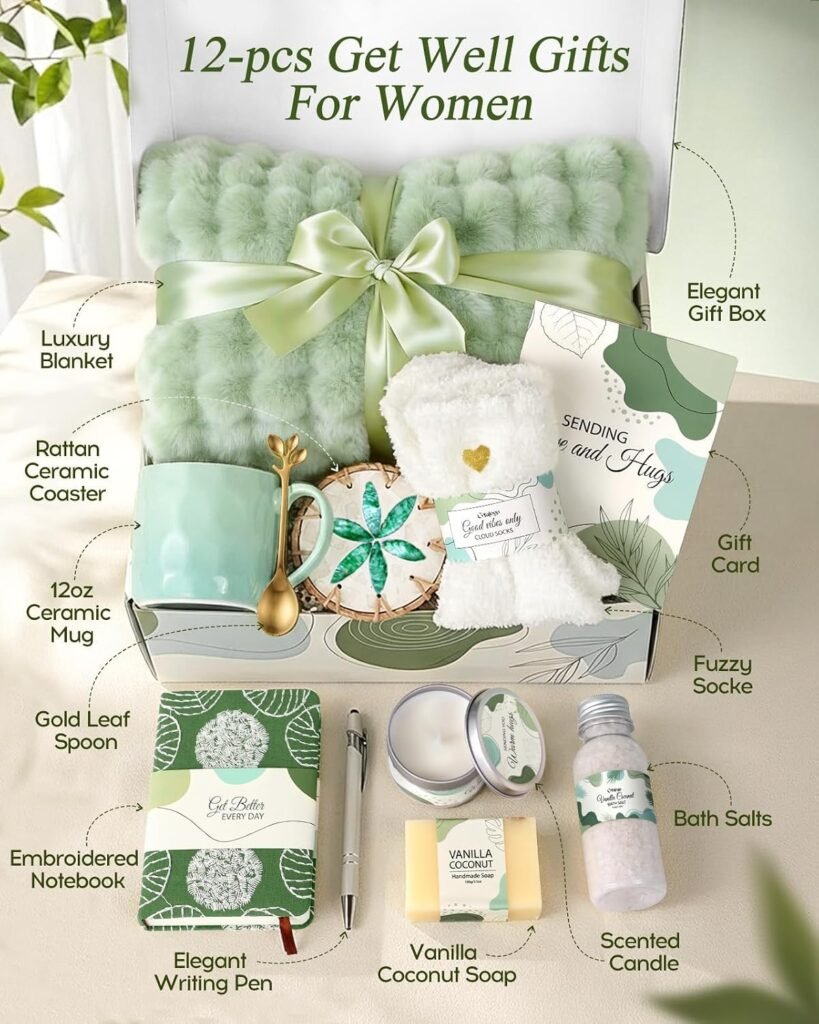
Picture the moment it arrives: a soothing sage-green box, unmistakably calm before it’s even opened. Inside, twelve pieces work together not as random trinkets, but as a full sensory experience — something to touch, something to smell, something to wear, something to sip from, and something to write in. That’s the difference between a novelty gift and a genuinely thoughtful one.
What’s Actually Inside (And Why Each Piece Matters)
A great self-care basket isn’t about volume — it’s about intention. Here’s what a well-curated 12-piece set brings to the table:
- A soft, oversized blanket (120cm x 160cm) — the anchor of the whole experience. This is what turns a couch into a recovery nest.
- Bath salts — for the nights when a hot soak is the only medicine that actually works.
- Vanilla coconut soap — a small, fragrant ritual that makes an ordinary shower feel like self-care.
- A scented candle — because ambiance matters when you’re trying to convince your nervous system to relax.
- Fluffy socks — unglamorous, universally loved, and somehow always exactly what someone needed.
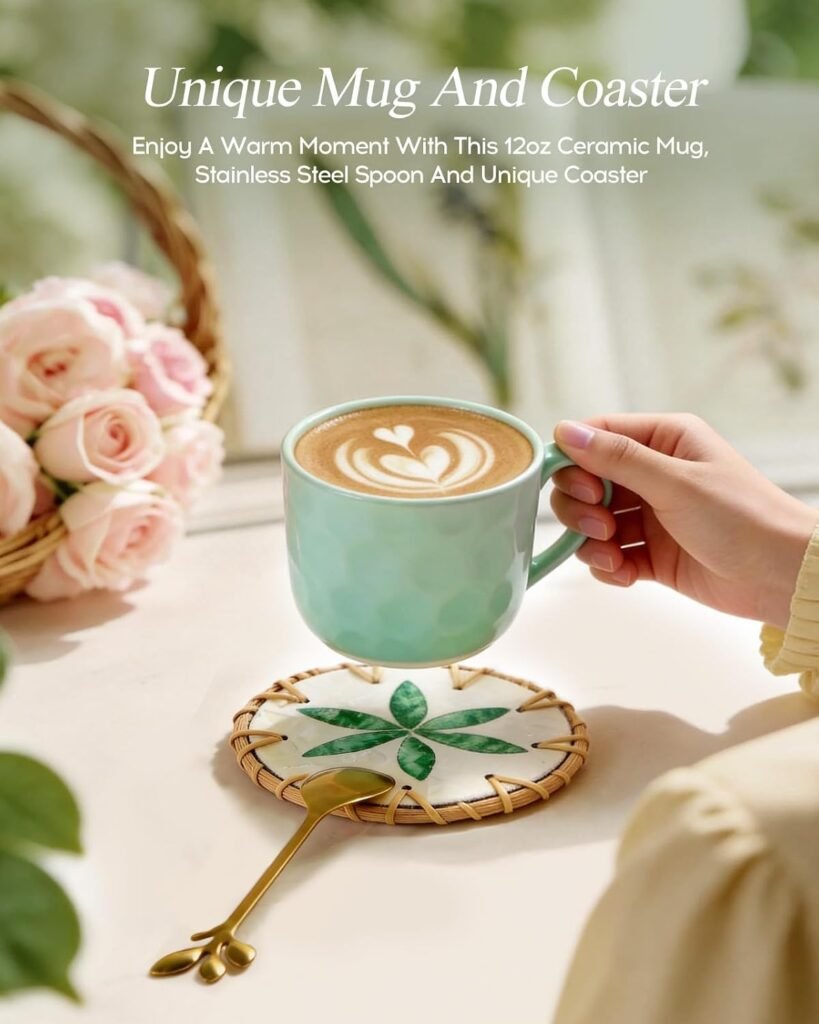
- A mug, coaster, and spoon — for tea that’s sipped slowly instead of gulped between tasks.
- A notebook and pen — space to journal, vent, doodle, or simply have somewhere private to put unspoken feelings.
- A blank greeting card — the one piece you get to personalize. This is where your voice enters the box.
Notice what’s missing: nothing overwhelming, nothing that requires effort to enjoy, nothing that adds to someone’s plate. Every item is designed to be used lying down, sitting still, or moving slowly — because that’s exactly the pace recovery and grief demand.
Who It’s For (Spoiler: Almost Everyone You Love)
This is the rare gift that doesn’t need a specific occasion to justify it. It works for:
- A friend recovering from surgery who needs comfort more than flowers.
- A mom or sister going through a hard season who deserves to be reminded she’s not carrying it alone.
- A colleague dealing with loss, when “I’m sorry for your loss” feels insufficient on its own.
- A birthday during a rough year, when celebration and comfort need to coexist.
- Simply because it’s Tuesday, and she’s been strong for everyone else long enough.
The Real Reason These Baskets Work
Grief and physical pain both share something in common: isolation. The person going through it often feels like life outside their window is moving on without them. A thoughtfully packed gift basket interrupts that feeling. It says, clearly and without needing translation: someone out there paused what they were doing to make sure you feel less alone right now.
That’s not something a text message can replicate. It’s not something flowers alone can do, either — flowers fade in a week, but a soft blanket gets used on the hardest nights for months. A candle gets relit. A mug gets reached for daily. The comfort compounds instead of wilting.
Give the Kind of Comfort That Lasts
At the end of the day, a get-well or sympathy gift isn’t about the box — it’s about the message packed inside it: I see you. I care. Take your time. I’m here.
If you have someone in your life who’s recovering, grieving, or simply needs to feel less alone this week, consider skipping the flowers and sending an experience instead — one she can unwrap slowly, use for months, and remember every time she wraps herself in that blanket.
Because sometimes, the most powerful thing you can give someone isn’t advice, isn’t answers, and isn’t even your presence — it’s permission to rest.